A good head and good heart are always a formidable combination. But when you add a literate tongue or pen, then you have something very special.
-Nelson Mandela
PROJECTS
INTRODUCTION
AHKLC members with projects they would like to share via the Association may contact us at info@ahklc.hk.
PROJECTS

Elevate Your Academic English with GenAI

Dr. Rita Gill SINGH, Hazal WONG, Miranda FUNG, Dr. Lillian WONG, Matthew ANDERSON, Paul MYERS, Peggy LAI, Dr. Aditi JHAVERI, Dr. Cindy NGAI Sing Bik, Dr. Alex Chun KOON, Mr. Jackin WONG, Dr. YUEN Ho Bun Bonny, and CHOW Kin Man
Elevate Your English for Academic Purposes (EAP) with GenAI is a groundbreaking initiative that is transforming how students transition from secondary school to university. Initially funded by SCOLAR, the project blends cutting‑edge AI technologies with research‑informed pedagogy to empower students to write more effectively, think critically, and engage more deeply while equipping teachers with innovative, future‑ready teaching strategies.
READ MORE

Correction of wrongly-written characters in professional texts, Test and Correction on Cantonese ‘lazy’ pronunciation, A Flipped Classroom for Cantonese Learning (中文自學室)
Project funding start and end date: July 2017 – Mar 2019
Over the years, many scholars have conducted various studies on wrongly written characters. However, the discussion mostly starts from the traditional perspective of phonetics and meanings, and seldom discusses it in depth from the aspects of style and context. "Professional texts" in this project means the practical texts written in specific occasion or professional settings. Students producing wrongly-written characters is linked with the style and context. For example, the form of the characters 辦 (to do) and 辨 (to distinguish) are very similar. Mistakes are mostly found in event proposals. This project aims at enhancing students' accuracy in writing, training students to use appropriate written language in different context, enhancing their writing skills and achieving effective communication.
READ MORE

Mastering the Technical Vocabulary of STEM
Project funding start and end date: September 2017 – July 2021
Mastering the Technical Vocabulary of STEM is a UGC-funded project that helps students of science and technology to learn and correctly use technical vocabulary, in both written and spoken English. In university language courses, it is often assumed that students do not require assistance from language teachers with technical language since it will be acquired during the study of content courses. However, research finds that specialist vocabulary is among the biggest challenges facing undergraduate students in Hong Kong (Evans & Morrison, 2012). Research also suggests that the role played by technical vocabulary has been significantly underestimated. A substantial portion (between 20% and 30%) of the vocabulary in specialised texts is composed of technical vocabulary (Chung & Nation, 2004; Liu & Lei, 2019; Nation, 2013), making such texts potentially difficult to decode. Students are also unlikely to use words that they do not fully understand. This project addresses the above problems by creating learning resources based on technical words judged to be important and difficult for students. The five key learning resources are:
- 10 subject-based corpora,
- 10 subject-based technical wordlists,
- A diagnostic quiz,
- Learning objects for 10 subject areas, and
- Guidelines for teachers who wish to make use of the resources

A Flipped Classroom for Cantonese Learning (翻轉粵語教室)
Project funding start and end date: June 2020-Oct 2021
Cantonese is the most commonly spoken language in Hong Kong. By learning Cantonese and understanding its daily expressions, students from around the world coming to Hong Kong can cope with everyday communication situations and integrate into society more successfully. In view of this, we have developed this customized online Cantonese learning platform, namely “A Flipped Classroom for Cantonese Learning”, to provide multi-media self-learning materials in line with the Hong Kong Polytechnic University Cantonese courses to allow students to prepare the content of each unit with learning tools such as the Internet and smart-phones before they have interactive Cantonese lessons in real classrooms. It is hoped that the platform can help enhance students’ learning effectiveness.
READ MORE
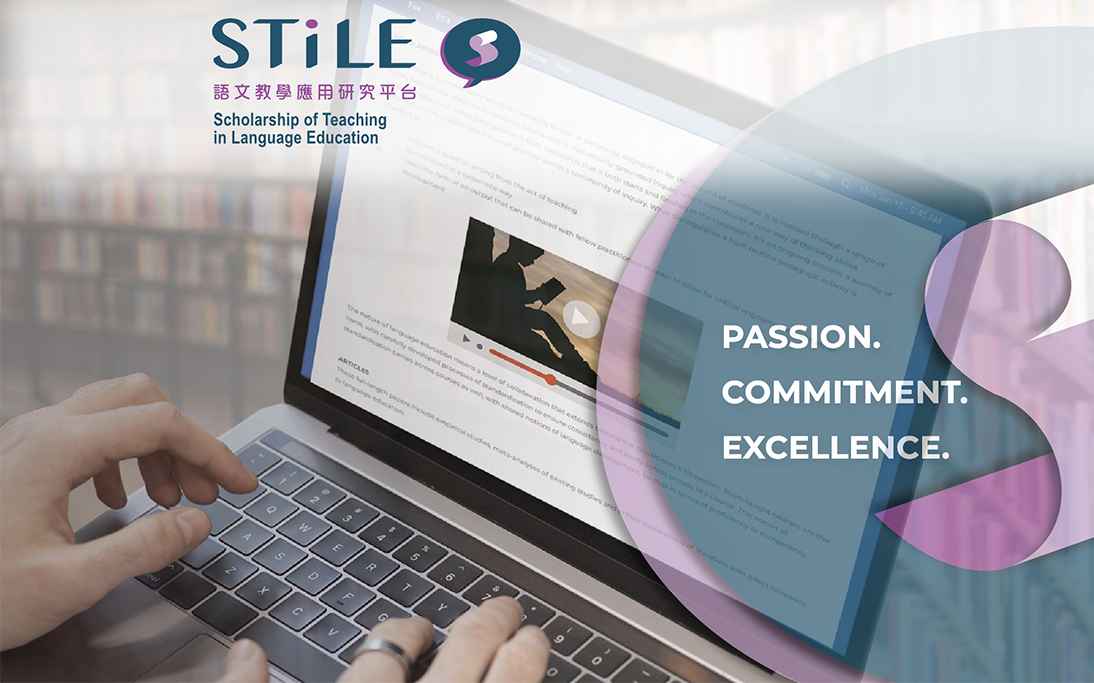
STiLE (Scholarship of Teaching in Language Education)
Project funding start and end date: March 2021 - June 2023
STiLE is a UGC-funded Inter-Institutional Collaborative Activity (IICA) project, whose active development is overseen by 5 UGC funded language centres in Hong Kong. This multimedia platform was motivated by a desire to provide more peer-reviewed outlets for language education practitioners to publish their scholarly work so that it is accessible for exchange in a way that others in the language education community can not only use but also develop, thereby adding to our understanding and improving our practice. In addition to full-length papers, it features a range of reviews and reflection pieces, along with ready-to-use digital learning objects for classroom teaching.
READ MORE

Scaling up students’ graduate attributes: Developing a series of Instagram reels and posts for effective and appropriate email communication for university students
Project funding start and end date: Aug 2021 to Mar 2023
Email has been a common and important communication channel between students and instructors in higher education since the 21st century. However, the limited exposure to and proper instructions on email writing and a second language learning environment added hurdles for our students to write English emails effectively. This project aims to raise students’ awareness of netiquette by teaching them the crucial skills in email writing using a series of succinct, easily-accessible, and interesting animated videos and posts that are created after analyzing their problems and needs. We hope that students can write emails effectively and appropriately and then be able to transfer the skills learned to other contexts and audiences after going through the videos and posts on our project Instagram account.
READ MORE
ICOSA (Inter-institutional Collaborative Online Self-Access)
Project funding start and end date: January 2012 – January 2016
The ICOSA project was a collaboration between the language centres of five tertiary institutions in Hong Kong, in which the institutions shared existing online interactive language learning materials and produced more materials that were shown to be needed by a collaborative needs analysis. This was aimed at saving time and money, as institutions would not be 're-inventing the wheel' when it came to materials development. Over 500 packages of materials were shared or produced. The materials were made available via a repository, hosted on a server at Lingnan University.
READ MORE

Pronunciation: the sounds of English words
Sounds introduces how to pronounce individual sounds in English in 10 short lessons. Learn about the vowels and the consonants through interactive exercises and short videos. By the end of the10 lessons learners should be able to, recognise the phonemic symbols of English, recognise the sounds of English, tell the difference between these sounds, say these sounds, know the common spellings of these sounds, and pronounce some words containing these sounds. This site can be accessed via a mobile device and is available to anyone without any sign in.
READ MORE
IELTS
The PolyU IELTS site provides tips and practice for the four papers of the IELTS exam. The materials have been specifically developed to provide support for students who are preparing to take the IELTS test. The site includes instructional videos, sample videos, interactive exercises, and sample papers so that students can have a complete overview of the IELTS exam before taking it for real. Sample videos on the site have received over half a million views - a testament to its popularity and usefulness.
READ MORE

Referencing
The PolyU Referencing Guides include detailed information to the four most common referencing styles used in HK universities. They are written to help you become familiar with academic referencing conventions and to reference your work correctly. The four styles, including APA, Harvard, IEEE and Vancouver are regularly updated so that students are able to cite their essays accurately. This mobile accessible page is easily navigable and is packed with information that the student needs in their university studies.
READ MORE